


Struggling with a persistent ache while running that isn’t going away?
It could be more than just muscle soreness. If you’re a runner in Boston, Cambridge, or Somerville dealing with persistent bone pain, a bone stress injury could be the reason…
Bone stress injuries (BSIs) are one of the most common overuse injuries in runners. They often start subtly—but without the right approach, they can progress into more serious injuries that require extended time off.
What Is a Bone Stress Injury?
A bone stress injury occurs when repeated loading exceeds your body’s ability to recover and adapt.
Running places healthy stress on your bones. But when:
Training increases too quickly
Recovery is limited
Fueling needs aren’t being met
Overall stress is too high
…the bone can’t keep up, leading to irritation—or even a stress fracture.
Why Runners Are at Risk
Running is repetitive by nature, which means small imbalances can build over time. Common risk factors include:
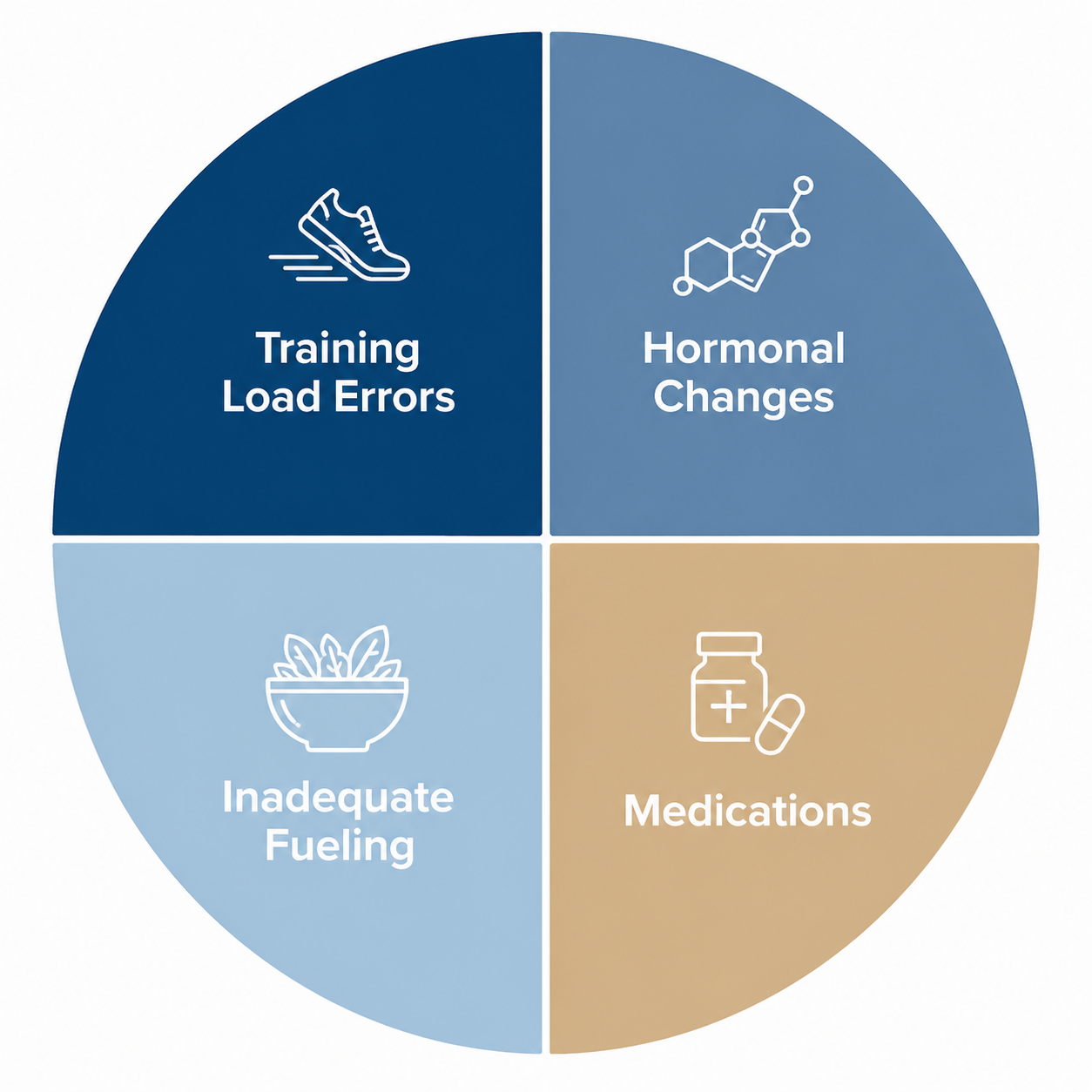
Training load errors
Rapid mileage increases
Training load errors
Sudden changes in intensity or terrain
Not enough rest
Inadequate fueling
Not eating enough to support training
Low energy availability
Hormonal changes
Adolescence, postpartum, and menopause can all impact bone health
Medications
Some medications (like corticosteroids or long-term anti-inflammatories) can affect bone strength
Bone Stress Injury Symptoms
BSIs often start quietly. Knowing what to watch for and when to seek help can allow you to catch it quickly before it progresses.
Early signs:
Dull ache during or after running
Gradual onset of pain
Hard-to-pinpoint discomfort
As it progresses:
Pain with walking or daily activity
Increased sensitivity to impact
Reduced tolerance to running
Pain that doesn’t improve as you warm up
If your pain is getting worse instead of better, it’s worth addressing early.
Bone vs. Tendon Pain
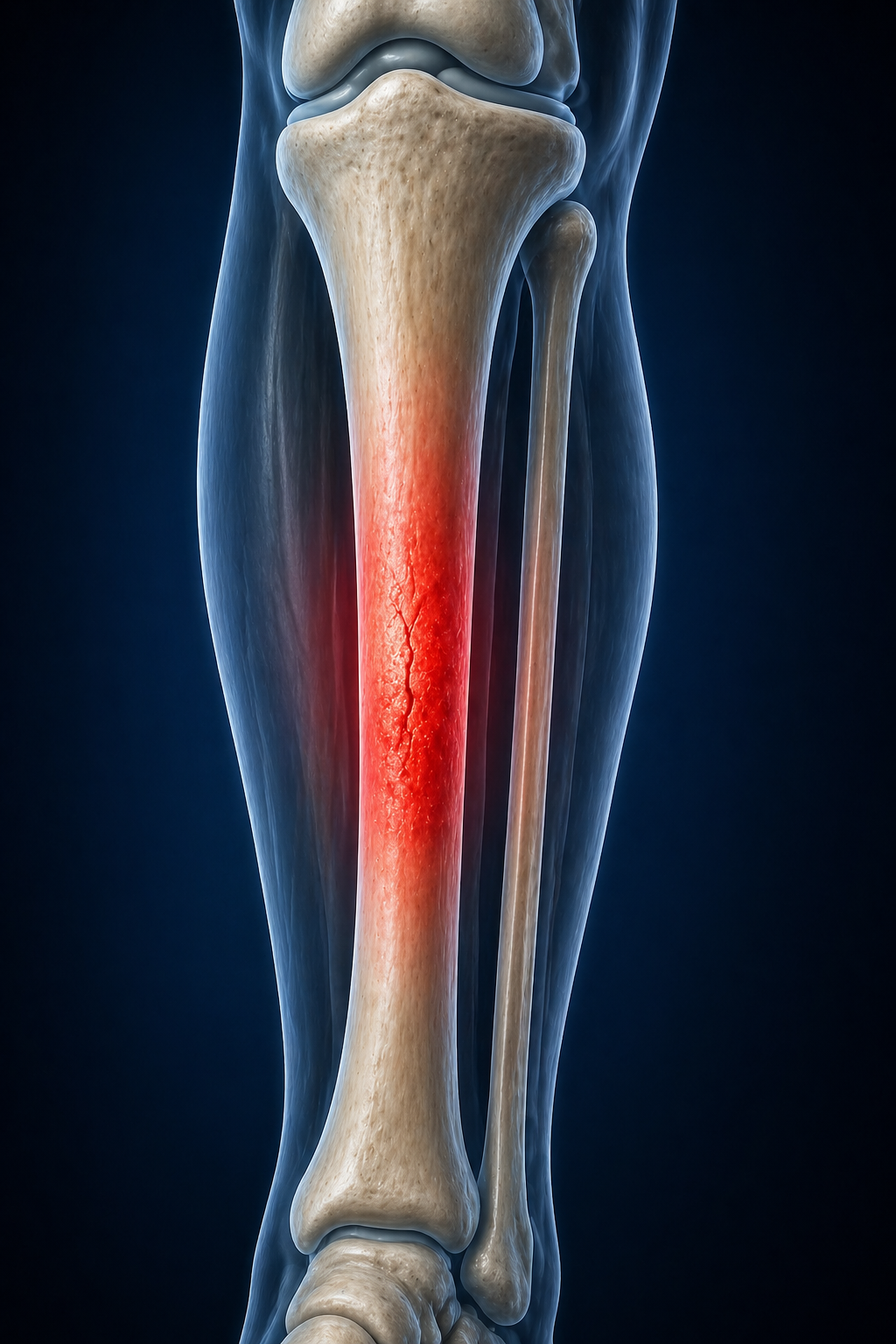
Bone stress injuries:
Worsen with activity
Hurt with weight-bearing
Don’t “warm up”
Can feel more diffuse or more localized depending on bony region
Tendon injuries:
Often improve as you warm up
May feel more localized
Are tied to specific movements that align with the injured muscle’s function
Common Injury Locations
Some areas of the body are more prone to bone stress injuries due to higher forces or reduced blood supply.
Higher-risk areas:
Femoral neck
Anterior tibia
Navicular
2nd and 5th metatarsals
These typically require more cautious management and longer recovery.
Lower-risk areas:
Posteromedial tibia
Fibula
Femoral shaft
Pelvis
Calcaneus
These areas often tolerate loading better and may have a more straightforward recovery—though they still require proper management.
How The Run Rx Helps
At The Run Rx, we don’t just tell you to rest—we help you understand why the injury happened and how to safely return to running.
If a bone stress injury is suspected or confirmed, especially in a higher-risk area, our priority is protecting the bone and allowing it to heal.
As you recover, we guide you through a step-by-step progression:
Single-leg strength and stability work
Progressive loading and strength training
Plyometric exercises to prepare for impact
Strength and load capacity testing to assess readiness
Once you’re ready, we introduce a gradual return-to-run program. At that stage, we may also use running gait analysis (including slow-motion video and Runeasi sensor data) if we think your mechanics contributed to the injury or could help reduce future risk.
The goal is not just getting you back to running—but helping you return stronger and more resilient.
Preventing Bone Stress Injuries
While we can do a lot to reduce risk, bone stress injuries aren’t always completely avoidable—especially with the demands of running. That said, there are several evidence-based strategies that can help build stronger, more resilient bone and better tolerate training load.
Progress training gradually
Strength train consistently
Fuel adequately
Space out harder efforts
Vary surfaces, shoes, and workouts
When it comes to strength and conditioning, bone responds best to specific types of loading. Incorporating these elements into your training can help improve bone resilience:
Heavy loading (strength training)
Quick contacts (like jumping or hopping)
Direction changes (multi-directional movement)
Varied movement patterns (not doing the exact same motion every day)
Bone adapts to high force, high rate, and varied stress—especially when paired with adequate recovery.
Get Back to Running—Stronger
Bone stress injuries can be frustrating—but they’re also an opportunity to rebuild with better structure and long-term resilience.
If you’re dealing with persistent running pain, we’re here to help.
👉 Schedule an evaluation today to get a clear plan for recovery and return to running.
Frequently Asked Questions
What is the difference between a bone stress injury and a stress fracture?
A bone stress injury exists on a spectrum. Early on, it may present as bone irritation or inflammation. A stress fracture is a more advanced stage where a small crack has formed in the bone. Catching it early can significantly shorten recovery time.
Can I keep running with a bone stress injury?
In most cases, no—continuing to run will delay healing and may worsen the injury. Bone needs a period of reduced or eliminated impact to recover. Trying to push through often leads to a longer recovery timeline or progression to a more serious injury.
The focus early on is giving the bone a chance to heal, then gradually reintroducing load in a structured, progressive way.
Do I need imaging for a bone stress injury?
Not always. Many bone stress injuries can be identified based on your history and a physical exam. However, imaging (like an MRI) may be recommended if:
Symptoms are severe or worsening
The injury is in a higher-risk location
Diagnosis is unclear
How long does it take to recover from a bone stress injury?
Recovery depends on the location and severity, but most cases take anywhere from 6 to 16+ weeks. Higher-risk areas may take longer and require more cautious progression.
When should I see a physical therapist?
You should consider an evaluation if you have:
Pain that’s worsening over time
Pain with walking or daily activity
Pain that doesn’t improve with warming up
A history of stress fractures
Early evaluation can help prevent a minor issue from becoming a more serious injury.

Somerville, MA
